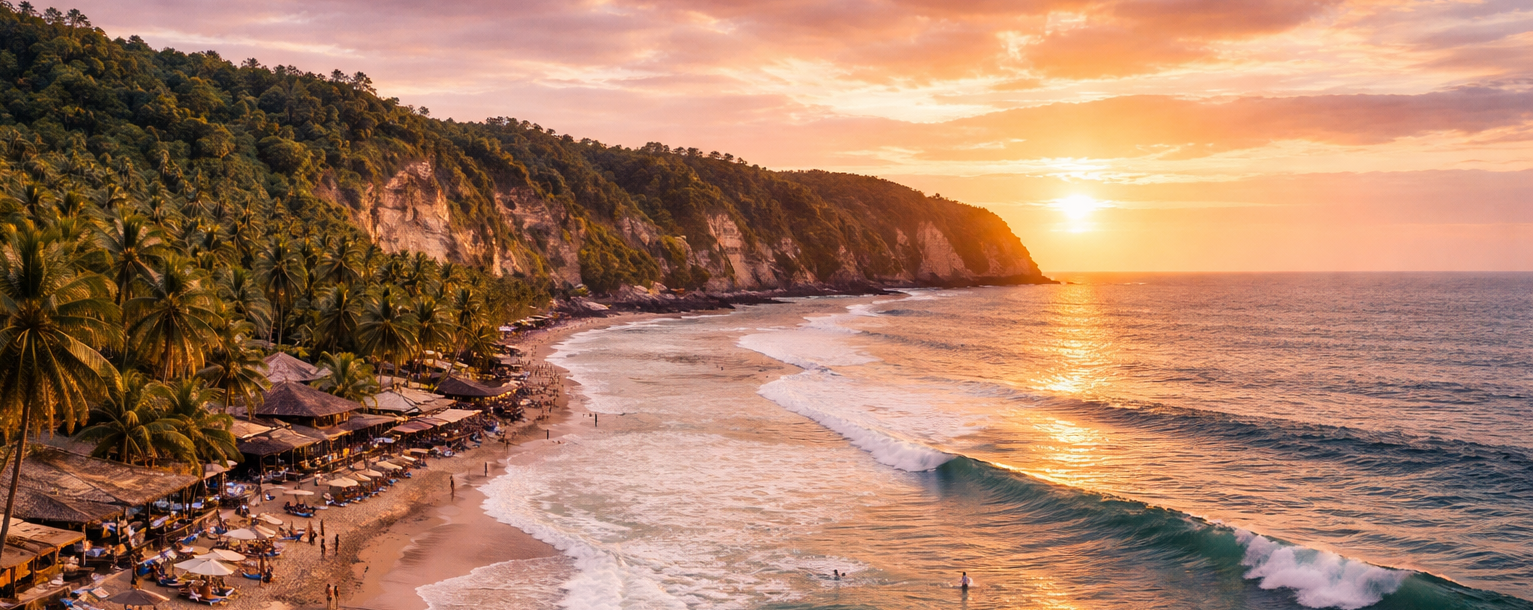
El Salvador has gradually positioned itself as one of the most compelling surf destinations in the world. Despite its small size, the country offers over 300 kilometers of Pacific coastline, with consistent swell, warm water throughout the year, and a remarkable concentration of high-quality point breaks.
What truly distinguishes El Salvador is not only the quality of its waves, but their consistency and accessibility. The coastline is dominated by long, clean right-hand waves that break over volcanic rock formations, creating ideal conditions for long rides and technical maneuvers. At the same time, the country offers a range of surf spots that cater to different skill levels, from beginner-friendly beaches to highly demanding point breaks.
Where to Surf in El Salvador: Top Spots
Punta Roca — The Most Iconic Wave in the Country
Location: La Libertad (Surf City)
Type: Right-hand point break (rocky bottom)
Level: Advanced


Punta Roca is widely regarded as the most important surf break in El Salvador and one of the best in Central America. The wave is known for its long, fast, and powerful right-hand sections that can extend for several hundred meters, allowing surfers to link multiple maneuvers in a single ride.
The break works best with solid south or southwest swells and offers a combination of speed, carving sections, and occasional barrel opportunities. Due to its rocky bottom and strong takeoff, it requires experience and precise positioning. It regularly hosts international competitions, including World Surf League events, which have helped position El Salvador on the global surf map.
Where to Stay
- Hotel Michanti
- Acantilados Hotel
- Hotel Los Farallones
El Tunco — The Center of Surf Culture
Location: La Libertad (Surf City)
Type: Beach break + rivermouth wave + point break
Level: Beginner to Intermediate


El Tunco is the most well-known surf town in El Salvador and serves as the social center of the surf scene. It combines multiple breaks — including La Bocana and El Sunzal — with restaurants, accommodations, and nightlife.
La Bocana offers a more powerful and technical wave near the river mouth, while nearby sections provide more manageable conditions. This variety makes the area accessible to a wider range of surfers.
Outside the water, El Tunco is where the energy shifts. Evenings are active; small bars, music, and beachfront restaurants create a social environment. This atmosphere attracts both locals and international travelers. It’s one of the few places in the country where surfing and nightlife intersect naturally.
Where to Stay
- Zelen Hotel
- Pargos
- Mirasurf Hotel & Waves
El Zonte — A Balance Between Quality and Tranquility
Location: La Libertad (Surf City)
Type: Right-hand point break (rocky and cobblestone bottom)
Level: Intermediate to Advanced


El Zonte offers a different experience compared to El Tunco. The wave breaks over a rocky bottom and is less predictable, with sections that change depending on tide and swell direction.
This makes it more technical and better suited for intermediate to advanced surfers who are comfortable reading the wave. It’s less consistent than Punta Roca but often less crowded. The town itself is quieter and more community-oriented. It’s also known for its role in the Bitcoin Beach project, which has brought international attention while maintaining a slower, more local atmosphere.
Where to Stay
- El Xalli
- Garten Hotel
- Palo Verde Sustainable Hotel
El Sunzal — Long and Accessible Waves
Location: La Libertad (Surf City)
Type: Right-hand point break (cobblestone bottom)
Level: Beginner to Intermediate


El Sunzal is one of the most user-friendly waves in El Salvador. It is a long right-hand point break with smooth, forgiving sections, making it ideal for beginners and intermediate surfers.
Unlike more powerful waves, El Sunzal allows for longer rides at a slower pace, which is why it’s commonly used for surf lessons. Even on smaller days, it remains surfable. The area offers a balance between accessibility and comfort, with beachfront accommodations and a calmer environment compared to El Tunco. It’s a good entry point for those new to surfing in the country.
Where to Stay
- Kayu Surf Resort
- Hotel Roca Sunzal
- Casa Sunzal
Las Flores & Punta Mango
Location: San Miguel (Eastern El Salvador)
Type: Right-hand point break
Level: Intermediate to Advanced


Located in the eastern region, Las Flores and Punta Mango offer a more remote and less developed surf experience. These waves are known for their consistency and long right-hand rides, particularly during the rainy season.
The region has been recognized as a World Surfing Reserve, highlighting both its wave quality and environmental importance.
Unlike La Libertad, this area feels more isolated. Access requires more effort, but in return, you get fewer crowds, stronger connection to nature, and a slower pace. Surf tourism here has also become an important part of the local economy.
Where to Stay
- Punta Mango Surf Resort
- Vista Las Olas
- Hotel Costa Dorada Surf Resort
Best Time to Surf
Dry Season (November to April)
During this period, conditions tend to be cleaner and more manageable. Waves are generally smaller, which makes it an ideal time for beginners or intermediate surfers who want to improve their skills in a controlled environment.
Rainy Season (May to October)
This is the peak surf season, when larger and more powerful swells reach the coastline. The waves become more challenging and dynamic, making this period more suitable for experienced surfers.
Costs and Practical Information
- Surfboard rentals: Around $10–20 per day depending on the type of board and location.
- Surf lessons: Typically $25–60 per session, often including board rental.
- Surf camps: Range from $500 to $1,800 per week depending on comfort and services included.
- Accommodation: Budget stays from $10–30, mid-range $50–120, and boutique hotels $150–300+ per night.
- Food: Local meals cost around $3–8, while restaurants range from $10–20.
- Transport: Airport transfers cost $30–50, and car rentals range from $25–50 per day.

Leave a Reply